Lakewood's New Conservation District Doesn't Come With a Tax Break, and That Surprises People
October 1, 2026
October 1, 2026
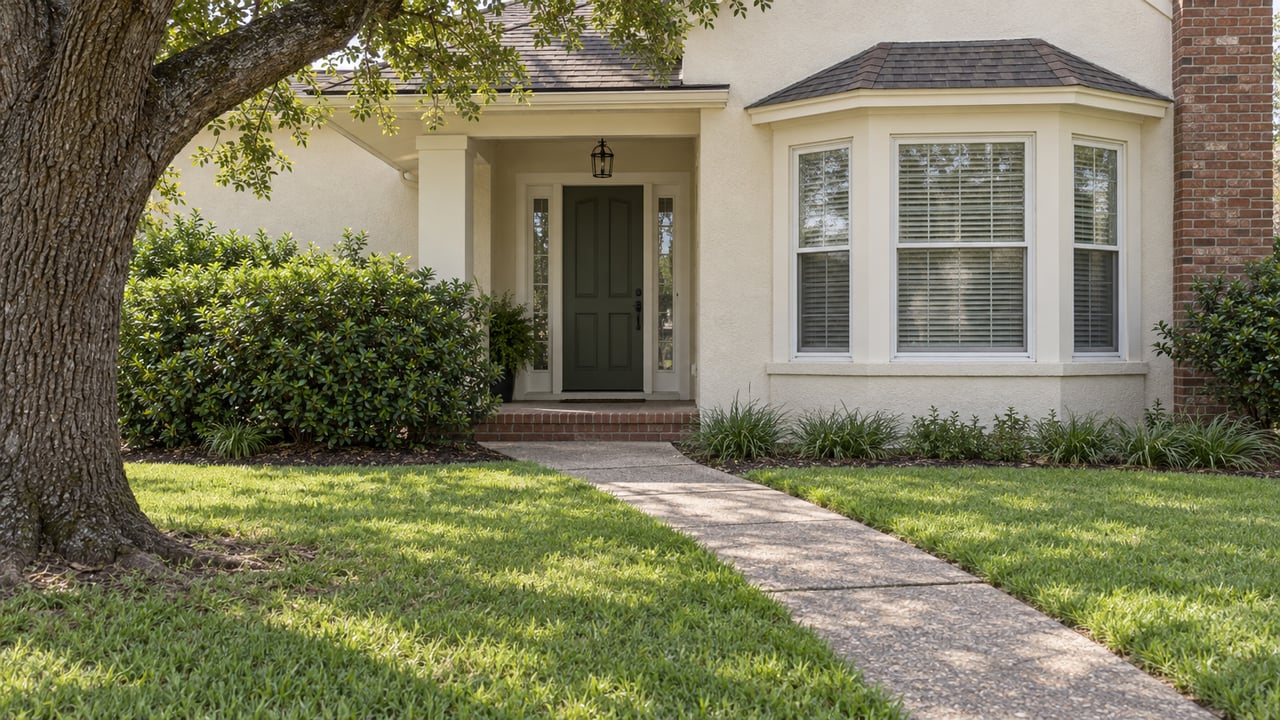
If a hundred-year-old Tudor on Lakewood Boulevard sits inside the neighborhood's newly expanded conservation boundary, does that also mean a break on the property tax bill? It's the question that comes up almost every time a buyer looks at an older Lakewood house with an agent, and the answer catches people off guard: no. Being protected from teardown and getting a tax exemption are two entirely different city programs, and confusing them can cost a buyer real money in assumptions they never should have made.
Lakewood's housing stock makes the confusion understandable. West of White Rock Lake, the neighborhood filled in mostly between the mid-1920s and the 1940s with Tudor, Spanish Eclectic, and French Eclectic homes, many of them designed by architect Clifford Hutsell or built by the development firm Dines and Kraft. That kind of pedigree looks and feels historic. But "looks historic" and "is legally protected" are not the same status in Dallas, and after three years of neighborhood fighting over exactly this question, the city finally drew a new line on the map in 2025.
The original Lakewood Conservation District dates to 1988 and only ever covered the Country Club Estates subdivision, starting at Abrams Road and stopping before it reached Brendenwood Drive or Copperfield Lane. Everything east of that line, including hundreds of the architecturally significant homes on Lakewood Boulevard, Lakeshore, Avalon, Tokalon, and Westlake, sat outside any protection at all.
A neighborhood committee started the expansion process in mid-2022, and it took roughly three years and more than a dozen public meetings to finish. The proposal at one point covered as many as 275 addresses in the Westlake Park, Monticello, and Gaston Place subdivisions. Opposition was real and organized. A group calling itself "No to CD2" argued the rules were too restrictive and that residents deserved to do what they wanted with property they already owned and paid taxes on. The City Plan Commission trimmed the boundary in response, and the Dallas City Council approved a further-reduced map on February 26, 2025, with an effective date of March 31, 2025. The final version brought 146 homes into the district, a smaller footprint than the original ask but the first real expansion of Lakewood's protected area in nearly four decades.
The ordinance recognizes five contributing architectural styles: Tudor, Spanish Eclectic, French Eclectic, Neoclassical, and Colonial Revival. Under the original 275-address survey, 206 of those homes fell into one of those five categories, which gives a sense of how consistent the architecture in this pocket of Lakewood actually is.
| Conservation District (Lakewood CD-2) | Landmark District or Individual Landmark | |
|---|---|---|
| Who reviews changes | City staff, via a Work Review Form | Dallas Landmark Commission, via a Certificate of Appropriateness |
| Demolition rule | Allowed only if code-compliance cost exceeds 80% of the home's Dallas Central Appraisal District value | A demolition rule applies |
| Property tax exemption | Not eligible | The city's Tax Incentive Information Packet says the exemption applies to the city portion of taxes only and requires annual reapplication to DCAD |
| Coverage in Lakewood | 146 homes as of the March 2025 expansion, plus the original Country Club Estates footprint | Determined property by property, separate from CD status |
That demolition threshold is worth sitting with. A home inside the district can only be torn down if bringing it up to code and zoning compliance would cost more than 80 percent of what the county already says it's worth. That is a meaningfully high bar, and it is the mechanism doing the actual protective work, not the architectural style label itself.
The clearest illustration of how parcel-specific this all is came in October 2023, while the expansion was still working its way through neighborhood meetings. A Hutsell-designed home at 7226 Lakewood Boulevard, one that neighborhood advocates specifically wanted included in the new boundary, had its demolition permit pulled before the ordinance existed to stop it. It came down that November. The house that had stood there for decades, with original architectural elements still intact, was gone before the protection its supporters were fighting for ever took effect.
Contrast that with 7102 Lakewood Boulevard, another Hutsell home a few doors down, which was renovated rather than replaced and later featured on the neighborhood's home tour as an example of what sensitive updates to a historic structure can look like.
The boundary lines also moved more than once during the three-year process, which means a specific address's status was genuinely uncertain even to people following the story closely. In October 2024, a $5 million 1926 Tudor manor at 6835 Westlake Avenue, a 9,200-square-foot home with a well-documented architectural pedigree, was reported to be sitting outside the proposed expansion area entirely, leaving neighbors able to do little but hope a future buyer would build something compatible if the original came down. Whether that specific parcel ended up inside or outside the final approved map is exactly the kind of detail that changed hands multiple times during drafting, and it is exactly why a buyer or seller needs to check current status rather than rely on what a street name suggests.
The confusion has a reasonable source. Dallas does offer a historic preservation tax incentive program, and it is genuinely valuable where it applies. It exempts a percentage of a property's appraised value tied to how much a rehabilitation costs, and it can cover expenses like roofing, windows, plumbing, electrical, and foundation work. But the city's own program page is explicit that eligibility requires the property to be a designated City of Dallas Landmark or a contributing structure within a Landmark District. A Conservation District designation, which is what Lakewood's CD-2 is, does not qualify a homeowner for this exemption on its own.
Even for homes that do qualify through Landmark status, the benefit is narrower than people often assume. The exemption only applies to the city portion of the property tax bill, not the county, school district, or hospital district portions, and it has to be reapplied for annually through the Dallas Central Appraisal District to stay in effect. A homeowner who gets the exemption approved once and assumes it carries forward automatically can lose it.
None of this makes Lakewood's Conservation District status meaningless. A KERA News report on the expansion quoted preservation architect Alicia Quintans explaining that conservation district protection changes the sequence of a demolition permit request into a question the city can actually say no to. That is a real outcome. It just is not a financial one.
If a Lakewood listing catches your eye and the age or style suggests it might carry some kind of historic status, a few concrete steps save real headaches later.
Verify the parcel, not the block. Dallas's zoning map tools and MapMyNeighborhood let you check whether a specific address falls inside the CD-2 boundary, the original 1988 district, a Landmark District, or none of the above. Two homes on the same street can carry different rules.
Ask about renovation history before assuming the district will stall your plans. Lakewood's Conservation Districts office was already completing around 1,600 reviews a year as of 2022, according to the city's chief planner at the time, which suggests the Work Review Form process is routine rather than a bottleneck for owners doing normal updates.
Understand the demolition math if a teardown or major rebuild is part of your plan. The 80 percent threshold tied to DCAD's appraised value is the number that actually determines whether a full rebuild is even legally possible inside the district.
Separate the preservation question from the tax question entirely. If a historic tax exemption matters to your decision, confirm Landmark status specifically. Conservation District membership alone will not get you there.
Does being in Lakewood's Conservation District lower my property taxes? No. The exemption program is tied to Landmark designation, a separate city process from Conservation District status.
How do I find out if a specific Lakewood address is inside the CD-2 boundary? Check the parcel directly through the City of Dallas zoning tools or MapMyNeighborhood rather than assuming based on the street name, since the boundary changed more than once during the 2022 to 2025 approval process.
Can I still add square footage or remodel a home inside the district? Projects go through a Work Review Form submitted to the city, and the volume of routine reviews the Conservation Districts office handles each year suggests most projects move forward without major delay.
Lakewood's older homes carry a kind of architectural continuity that few Dallas neighborhoods can match, and the 2025 expansion means more of that continuity now has a legal backstop against demolition. But the protection and the tax bill are two different conversations, and getting them mixed up is an easy way to misjudge what you're actually buying. If you are weighing a purchase or a listing in Lakewood and want a clear read on what a specific address's designation actually means for your plans, Anthony Cedano can walk through it with you before you write an offer.
This article is general information, not legal, tax or financial advice. Consult a qualified professional about your situation.
Stay up to date on the latest real estate trends.
Get assistance in determining current property value, crafting a competitive offer, writing and negotiating a contract, and much more. Let me guide you through your home-buying journey.
ANTHONY CEDANO
5950 BERKSHIRE LN STE 100 DALLAS TX 75225