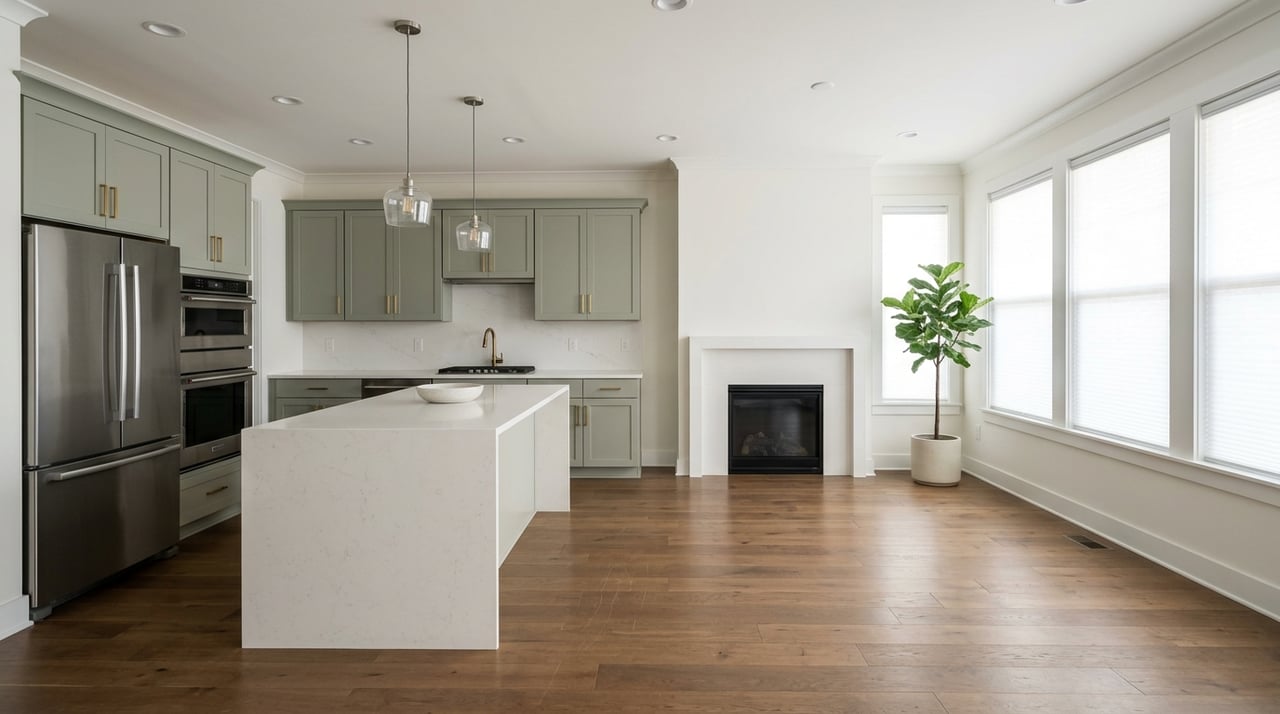
Should You Rent Or Buy In Uptown Dallas?
June 11, 2026
June 11, 2026
Trying to decide whether to rent or buy in Uptown Dallas? You are not alone. Uptown offers walkability, nightlife, transit access, and amenity-rich living, but the cost of getting into the neighborhood can look very different depending on whether you lease or purchase. This guide breaks down the real numbers, tradeoffs, and decision points so you can choose the option that fits your timeline, budget, and lifestyle. Let’s dive in.
Uptown is not a typical Dallas neighborhood. It is a dense, urban district with easy access to the Katy Trail, Griggs Park, the McKinney Avenue Trolley, and DART, which makes location convenience a big part of the value.
It is also Dallas’s highest-density residential neighborhood, and Griggs Park reports that the area has only 19 square feet of park space per person compared with a Dallas average of 119. That helps explain why building amenities carry so much weight here. In Uptown, your pool deck, fitness center, lounge, parking, and coworking space may feel like an extension of your home.
If you are renting in Uptown, expect pricing to land well above many other Dallas submarkets. Current data points vary by source, but they tell a similar story.
Realtor.com reports a median rent of $2,413. Zumper’s June 2026 estimate shows $2,801 average rent, with one-bedroom units around $2,310 and two-bedroom units around $3,558. Rent.com places Uptown one-bedrooms around $2,402.
The exact number depends on the building, lease timing, unit size, and how each platform calculates its data. Still, the big takeaway is simple: Uptown is one of Dallas’s pricier rental markets.
Many Uptown luxury rentals offer a strong amenity package. Common features include:
For many renters, those amenities help justify the monthly cost. Since park space is limited and the neighborhood is highly urban, the building itself often becomes part of your daily lifestyle.
Buying in Uptown has a much wider price range than renting. Inventory spans from more attainable condos to high-end townhomes with a lock-and-leave setup.
Realtor.com reports 80 homes for sale with a $657,000 median listing price. Redfin shows Uptown condos at a $535,000 median listing price and townhouses at a $900,000 median listing price. Active condo listings also stretch into the low-$200,000s, while some townhomes run from $879,000 to $1.95 million.
That range matters because “buying in Uptown” can mean very different things. A smaller condo and a luxury townhome may both be in Uptown, but the monthly cost and upfront cash needed can be miles apart.
Purchase price is only part of the story. In Uptown, your monthly ownership cost may include:
Using Freddie Mac’s 6.48% average 30-year fixed rate for June 4, 2026 and a 20% down payment, a condo listed at $239,900 would have a principal-and-interest payment of about $1,211 per month. Add the listed annual property taxes and $222 monthly HOA, and the total reaches about $1,886 per month before insurance and maintenance.
By comparison, a median $535,000 Uptown condo works out to roughly $4,000 per month before insurance and maintenance using that same framework. A $900,000 townhome comes in around $6,500 per month before insurance and maintenance.
That is why rent-versus-buy decisions in Uptown are rarely one-size-fits-all. Some lower-priced condos can come surprisingly close to local rent levels, while median condos and most townhomes usually require a much larger monthly commitment.
In Uptown, HOA fees are not a side note. They are part of the core affordability conversation.
Those fees vary widely. One current condo listing at 3901 Travis St. shows a $222 monthly HOA and a $5,437 annual tax bill. A State Thomas townhome at 2411 N Hall shows about a $227 monthly HOA equivalent, while another townhome at 2619 Colby is listed with no HOA.
For condos especially, HOA dues may cover items like association management, insurance, grounds, sewer, trash, and water. So while the fee raises your monthly payment, it may also replace costs and services that would otherwise show up separately.
The monthly payment gets most of the attention, but your upfront cash requirement often decides whether buying is realistic right now.
The CFPB says closing costs typically range from 2% to 5% of the purchase price. On the $239,900 condo example, a 20% down payment plus closing costs adds up to about $52,800 to $60,000 in cash. On a $535,000 condo, that jumps to about $117,700 to $133,800.
Lower down payment options may exist, including FHA and certain conventional loans, but lower down payments usually add mortgage insurance. If you want to buy in Uptown, the question is not just whether you can qualify. It is whether the full cash commitment fits comfortably within your overall financial plan.
Texas has no state property tax, but local property taxes still matter. In many Uptown ownership scenarios, taxes are one of the biggest monthly costs after the mortgage.
For a primary residence, Texas homestead exemptions may help reduce the tax burden, including a $140,000 school-district exemption. If you are comparing renting and buying, this is one of the line items worth reviewing carefully because it can materially affect your true monthly cost.
Renting is often the cleaner choice when your future plans are not fully settled. If you are relocating to Dallas, changing jobs, testing out urban living, or think you may move again within a few years, leasing can keep your options open.
Renting also works well if you want the Uptown lifestyle without taking on repairs, maintenance surprises, or the effort of eventually selling. In a neighborhood where many buildings offer concierge service, pools, coworking space, and fitness centers, renters can access a lot of lifestyle value with less long-term commitment.
Buying usually starts to make more sense when your Dallas plan feels stable and you expect to stay put for at least a few years. Ownership can give you more control over your space, more consistency in where you live, and the chance to build equity over time.
In Uptown, buying can be especially appealing if you find a condo whose total monthly cost compares reasonably with what you would otherwise spend on rent. That tends to happen more often at the lower end of the condo market than with median-priced condos or luxury townhomes.
If you are stuck between the two, use this practical lens.
Rent if your timeline is short, your mobility matters, or you want the easiest path into the neighborhood’s amenity-driven lifestyle. Buy if your timeline is longer, your finances are stable, and the numbers make sense not just at purchase, but month after month.
In Uptown, that usually means renting wins on flexibility and convenience, while buying wins when you are ready to trade liquidity for equity and more control. The right answer depends less on what is “better” in general and more on how long you plan to stay and what kind of monthly and upfront cost you can support.
Uptown is one of the most attractive urban living options in Dallas, but it is also a market where the details matter. Rent gives you flexibility and easy access to high-end amenities. Buy can be a smart long-term move, but only when your timeline, cash reserves, and monthly comfort level all line up.
If you want help comparing a specific lease option against a condo or townhome purchase, that side-by-side analysis can make the decision much clearer. For tailored guidance on Uptown condos, townhomes, Class-A rentals, or your next move in Dallas, connect with Anthony Cedano.
Stay up to date on the latest real estate trends.

Get assistance in determining current property value, crafting a competitive offer, writing and negotiating a contract, and much more. Let me guide you through your home-buying journey.
ANTHONY CEDANO
5950 BERKSHIRE LN STE 100 DALLAS TX 75225